
The Interpretation Layer Will Average You Out
By Conny Lazo
Builder of AI orchestras. Project Manager. Shipping things with agents.
You optimised your résumé. You matched the keywords, closed the gaps, and ran it through the AI until it described someone you would genuinely like to meet. Then you sent that person into the void, roughly a hundred times. The void is many things. A correspondent is not one of them.
Here is the part nobody mentions. It is not that no one read it. Something read it. It read all four hundred of them in less time than you spent choosing the font, it was not a person, it did not feel a single one of your keywords, and it could not tell you apart from the other three hundred and ninety-nine. You did not lose. You were rounded off.
The end of shouting
Nate B. Jones recently shared a story. He needed a new sound system. He didn't go to a store. He didn't read reviews. He opened a conversation with his AI, described his room dimensions, named his budget, and described how he wanted the sound to feel. Two AIs, Claude and ChatGPT, gave him exactly the recommendations he needed. No showroom. No salesperson. No weekend lost to comparing speaker cables. He described a room and a feeling; the machine did the rest. The hi-fi industry, which has spent forty years convincing people that happiness is a thicker cable, was not consulted.

Then he said, "I don't know if I got the truly best option. I just know I got what seemed like the best option — because the AI told me." He says this calmly, the way you'd report the weather. That is the part that should worry you.
Think about what that sentence means. He trusted the interpretation. Not the product. Not the brand. The AI's read. Somewhere, a team spent a year and a budget making that product feel like freedom. They workshopped the tagline across a dozen meetings. They never got a vote. The sale happened in a conversation they weren't invited to — and, increasingly, neither are you.
This is not just a problem for job-seekers. It is the same problem for marketers, for products, for whole companies. A twenty-five-year-old game is ending. Google built an economy on attention — get the eyeball, walk it down the funnel — and that game ran for a generation. Now the web is filtered through what an AI thinks of you, and the old economics are compressing fast. Twenty-five years of marketing wisdom, a generation of best practice, and the customer skipped all of it to go ask a chatbot. As Nate puts it, there's less juice in the orange to squeeze. You feel it when a thousand applications go out and nothing comes back. The attention economy isn't broken. It's just not where the future lives.
For years we were told: shout louder. Polish the image. Make the bold claim. Stack the keywords. But the machines doing the shopping don't feel the pull of a well-lit photo. They don't get charmed. They read what's actually there — facts they can verify, patterns they can compare, proof they can hold against a claim.
The résumé trap (and why it's not your fault)
Here's where it gets painful, and I want to be careful, because this is a structural trap, not a personal failure.
You feel the pressure to look perfect, so you let the AI optimise everything — every keyword matched, every gap filled, every edge sanded smooth. Then you wait. You check your inbox. You check your spam folder. You check your inbox again, in case the rejection got shy. Nothing comes back.
Picture the other end. A hiring manager, Monday morning, four hundred applications for one role, and an AI that has already read every one of them before her coffee is cool. Here is the brutal part: four hundred people asked the same AI to make them sound exceptional. It did. Four hundred times. Identically. The signals cancel out. You don't stand out; you become the average candidate, because everyone followed the same instructions and the machine reads the average and moves on.
The tool you used to be found is the exact reason you can't be found.
Nate calls this table stakes. Customising the résumé, targeting the cover letter, matching the keywords — you have to do it, and you will get no credit for it, because everyone does it. Expecting to be hired for that is like expecting applause for wearing trousers. This is not strategy. This is the floor.
It's the same if you're selling a product. If your shoe company can describe its spring system in plain, structured, provable terms — the materials, the energy returned per stride, numbers a machine can actually read — you might make the shortlist. Lean on "feel the freedom" instead and you get flattened into the category average. An AI has never felt freedom. It has never felt anything. It has, however, read your spec sheet, and it has notes.
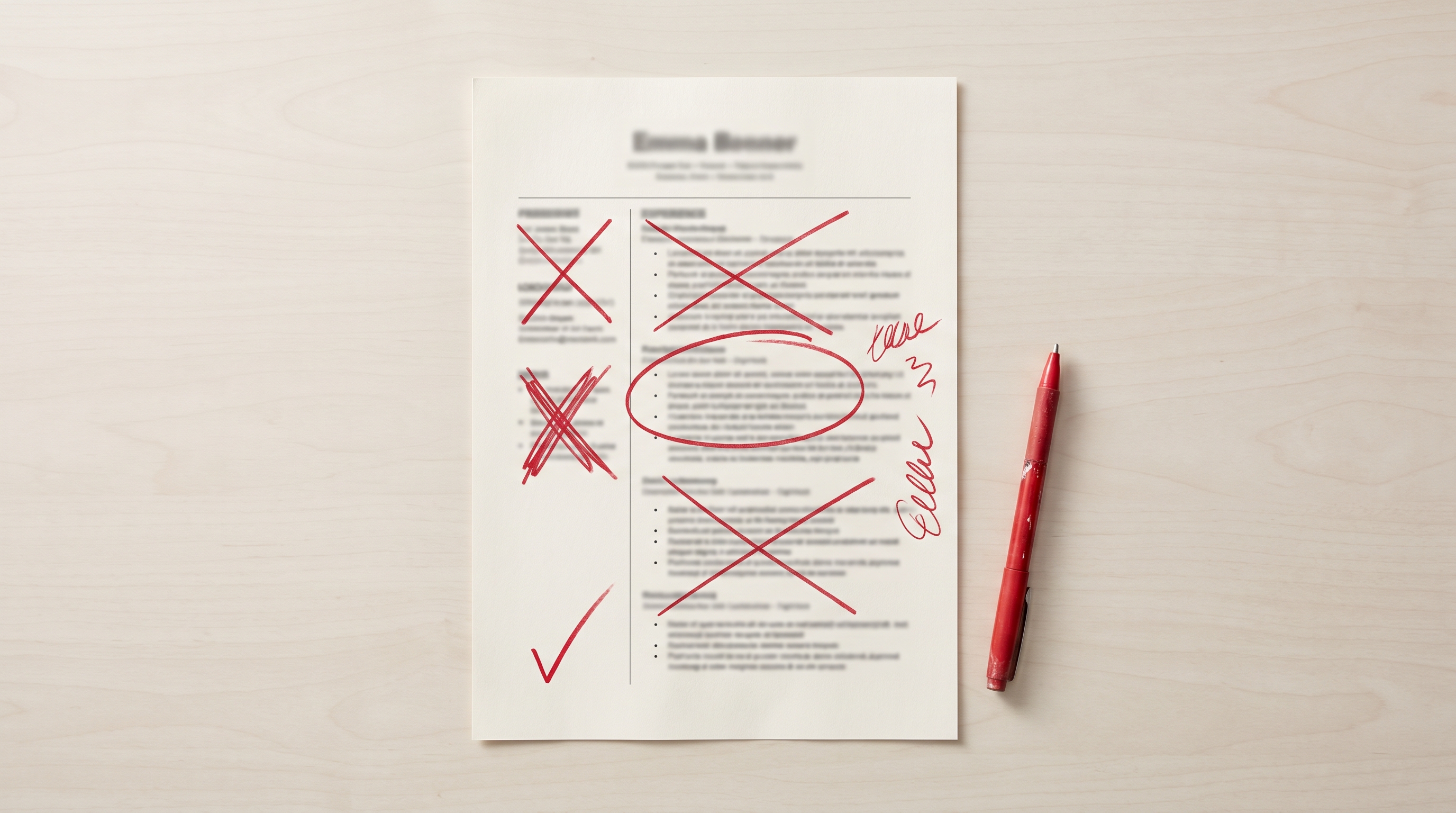
The opinionated survive; the generic gets averaged out. The more precise you are, the more legible you are to the machine. This is as true for a CV as for a product page.
There's a crack in this trap, and it's the same crack that was always there: proof. Actual, verifiable proof of what you did. Not what you can claim. What you can show.
How I am building my own record
A while back I spent months of late nights building a coding tool I believed in — evenings, weekends, the kind of hours that feel serious even when you're not sure what you're building toward. I told people I was building something important. I was, technically. I was building a very thorough demonstration of being slightly too late. The tool worked. By the time it worked, the problem it solved had quietly solved itself — for free, for everyone. I was two months behind the curve.
You could call it building the infrastructure for your own redundancy. Ahead of schedule.
But here's what those months actually produced, and this part didn't become obsolete: every night, I had to decide what "done" meant. Not done-enough. Not done-for-now. Done. I built a standard for what I would and wouldn't ship. I practised saying no to my own shortcuts — the temptation to leave something half-right because it was late and nobody would know. There were nights I deleted a full day's work and started over because I ran my own check and it didn't pass. Nobody saw that. Nobody asked for it. It was just the rule.
The project became optional. The rule didn't.
This is also where I'll say something about being "a little technical," because most people sell themselves wrong on both ends of it. I don't write code. I write specifications. It is the most defensible thing a person can say while personally shipping no code. But I describe what should exist with the precision of someone who has to live with the result, and that is not the same as being an engineer. Nate makes this explicit: the people who will do well here are not the engineers who can build anything, and not the non-technical people who outsource everything. They're the ones who understand enough to make the machine legible — to close the gap between what they want and what an AI can actually read. A specification precise enough to be provable is a specification an AI can trust. The discipline that makes you a good builder is the same discipline that makes you findable.
The two things that actually matter
There are two things that matter now, and only one of them is easy to see.
The first is your track record — what you actually built, wrote, shipped, fixed, and refused to ship. This is the part an AI can read. If you say you're a great writer, where are the pieces? If you solve hard problems, where's the record? If you hold a high standard, what did you turn down?
The second is harder and more private: the standard itself. The gate inside you that runs the check — the thing that says not yet, not because the deadline moved or someone's watching, but because you know it isn't good enough and you won't put your name on it. That gate is what produced the record. It's the thing that survives when the specific tool, project, or job becomes obsolete.
The two are connected but not the same. You can game the record, for a while. You can publish things with your name on them that you know aren't quite right and hope nobody notices. I did this once. There's a particular feeling when you reread your own sentence and think I knew better than this — that feeling is the sound of the gate failing. Once you've heard it, you know the difference.
The record is visible; the gate is private. But over time the gate shows up in the record, because it decided what got in. An AI in three years isn't going to read your keywords. It's going to read the pattern — the things you made, the consistency of the standard, the moments you stood behind something and the moments you quietly said no. It sees the gate's work even though it never meets the gate.
And here's why this matters now. Most people are still optimising the surface — the keyword game, the volume game, the shout-louder game. They are putting an extraordinary amount of effort into becoming indistinguishable, then wondering why it isn't working. The track record that comes from an honest internal standard is almost impossible to fake at scale, because it requires actually deciding, night after night, what you will and won't ship when nobody is watching.
The gate isn't glamorous. Training it looks nothing like building a portfolio. It looks like deleting work that beat the deadline but failed your own check. Like drawing a line and not crossing it when you are the only person who knows the line exists. No credential comes out of this. No certificate. No LinkedIn badge shaped like a tiny trophy. Just a standard, applied in private, until it shows up in the public record in ways you never have to explain — because the record explains itself.

That kind of consistency is what AI is learning to find. It's the only signal that doesn't compress into noise.
The offline move — and the counterintuitive part
You'd think that if machines do the transacting, human connection matters less. Why build a reputation in a room if the room isn't where the purchase happens? Nate argues the opposite. When more of the transaction is mediated by a machine, the human memory that comes before it gets rarer — and rarer means more valuable.
The agent retrieves the options, weighs the trade-offs, summarises the specs. But a human still applies the preference. If Nate had a real loyalty to his old sound-system company — built over years, earned in person — he wouldn't have asked his AI for the best system. He'd have said find me that one. The machine stops choosing and starts fetching. It doesn't return fifteen options ranked by relevance. It returns one. You. Which is a very different afternoon for everyone else on the list.
So there are two ways this goes, and knowing which one you're in tells you where to spend your energy. One: the AI interprets and picks, no relationship, no name — and all that matters is how legible and provable your record is. Two: the human already knows the name, describes the person they remember, and the AI is sent to fetch that one — and all that matters is whether you were memorable enough in the room to become the name they say.
Both roads lead to the same two bets: be genuinely memorable to the people you actually meet, and be findable and specific when an agent comes looking. Nate calls it choosing both internets. I think of it as the difference between being retrievable and being requested.
Why your real work is your superpower
This economy asks one question: can you back it up? Not with better language. With proof.
When a machine summarises you — when it boils your record down to the sentence a human will actually read — the thing that survives is the thing with an opinion. "Good communicator" does not survive. "Detail-oriented" does not survive. "Passionate self-starter" has never survived anything, including the sentence it was standing in. "Published a four-thousand-word argument that X is wrong, with the evidence" survives. "Refused to ship because the spec wasn't ready — here's the post-mortem" is something a machine can actually repeat. You don't need to be loud. You need to be specific enough that there's something left after the compression.
You don't have to be a slick salesperson. You don't have to exhaust yourself in a game where everyone is shouting.
Build real things. Set your own standard and hold it, especially when nobody's watching, because that's the only time it counts. The machines get smarter every month. The one thing they can't manufacture, however good they get, is proof of work you actually did, produced by a gate that said no. That part is yours alone.
A warning: there's a stretch in the middle where it doesn't feel like it's working. You're holding the standard, building the record, and nobody notices. The person next to you is louder and less careful and seems to be doing fine. That stretch is real, and it can last. But you're not building for today's algorithm. You're building for where this is very clearly going: the record matters, and eventually only the record matters. The signal you're laying down now will be more legible in two years than it is today.
Picture it working in your favour. Someone needs exactly what you do. They describe it to an AI; the AI reads the actual record — what you made, the standard you held, the pattern of what you shipped and what you refused to. Your name comes up. Not because you gamed anything, but because the record is real and findable and nobody can borrow it. You built it one quiet night at a time, and now it does the work of a sales pitch without a word of self-promotion.
Or they already know your name, because you were in the room when it mattered, and they tell the AI to go find you specifically. It doesn't return fifteen candidates. It returns you.
You don't have to shout anymore. You just have to be real.
And if you've already been doing the real work quietly, without much reward and without much noise — this economy is finally built for you.
Sources
- Nate B. Jones, The Prove-It Economy is Here | And Most Marketers Aren't Ready (AI News & Strategy Daily).