
The $100,000 Art: Why Literary Translation Is Harder Than You Think
By Conny Lazo
Builder of AI orchestras. Project Manager. Shipping things with agents.
When I started researching what it would cost to translate my book, the numbers were sobering. Literary translation rates typically range from €0.10 to €0.30 per word—lower than technical or legal translation, despite requiring arguably more skill. For an 80,000-word novel, that's €8,000 to €24,000 per language before editing and proofreading. Multiply by several languages and you're looking at a budget most independent authors simply don't have.
That reality check sent me down a rabbit hole. And what I found surprised me.
I built Text Grand Central (formerly FidelTrad)—a multi-agent translation system still in active development—to explore whether AI could assist with literary translation at scale. What I discovered wasn't that AI replaces human translators—it's that literary translation is exponentially more complex than I initially realized, and the multi-agent architectures emerging in this space are beginning to reshape the economics of creative work.

The Hidden Complexity Most People Miss
Let me start with what gets lost. Marcel Proust's famous opening: "Longtemps, je me suis couché de bonne heure." Every English reader knows it as "For a long time I used to go to bed early." Clean, simple, direct.
Except everything is wrong.
The French "longtemps" carries mythic weight—"long, long time ago" in fairy tales. "Bonne heure" phonetically echoes "bonheur" (happiness). The tense structure shows past action with present effects, impossible in English. French readers get mythology, time, and happiness wrapped in memory. English readers get insomnia.
That's one sentence. Now try Kafka's "Ungeziefer"—the creature Gregor becomes in Metamorphosis. German readers understand: any household pest, creatures "unfit for sacrifice" in Middle High German. English translators must pick one meaning, losing the layered horror that makes the story work.
I fed these examples through Claude Opus 4.6. The AI caught the phonetic similarity between "bonne heure" and "bonheur." It identified the mythic register of "longtemps." But it completely missed why these choices mattered.
The Economics of Impossibility
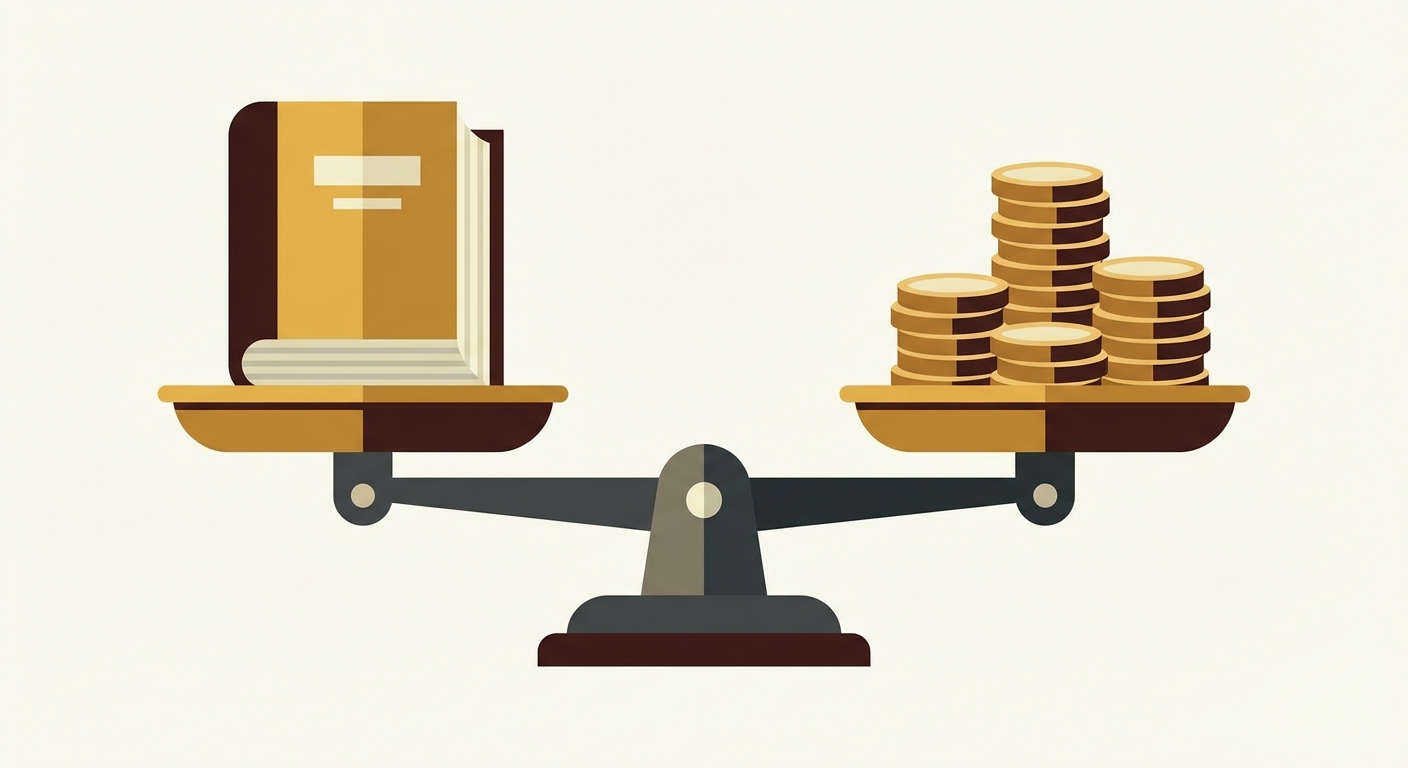
Professional literary translation costs between $0.08-$0.50 per word. Premium translators—the Gregory Rabassa types who translated García Márquez—command higher rates. A full novel translation runs $15,000-$100,000 including editorial review and cultural consultation.
The global language services market hit $81.45 billion in 2026, projected to reach $147.48 billion by 2034. Yet literary translation—despite being among the most artistically demanding specializations—is paradoxically one of the lower-paid segments. Technical, legal, and medical translation typically command higher rates. Literary translators are often underpaid relative to the extraordinary skill required, a reality the industry itself grapples with.
Here's what the industry discovered: AI didn't eliminate translation jobs. Bureau of Labor Statistics projects translator employment growing from 78,300 to 80,100 through 2033. The bifurcation isn't human versus AI—it's specification versus production.
When I built Text Grand Central, I wasn't trying to replace human translators. I was trying to elevate what human judgment looks like.
What AI Gets Wrong (And Right)
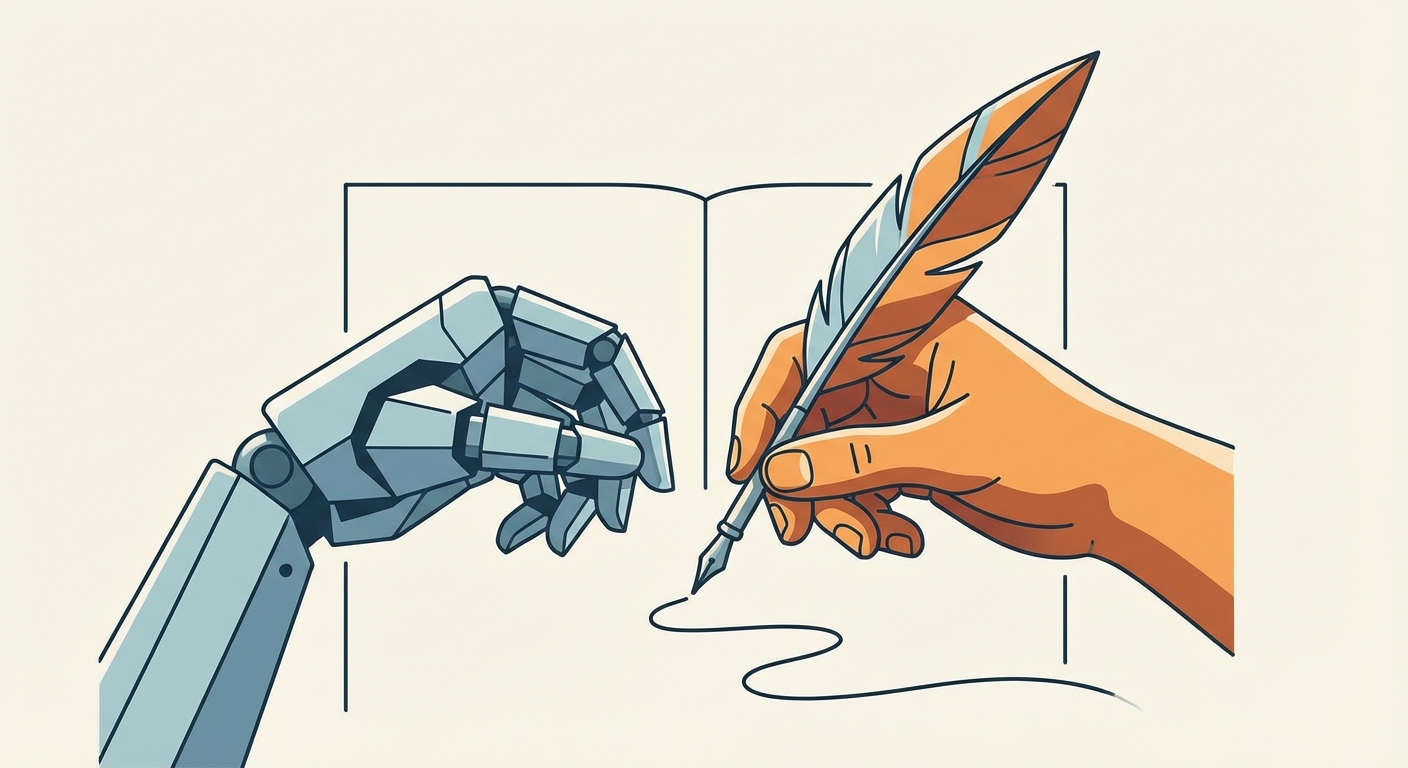
BLEU scores—the standard metric for translation quality—are literary death. They measure word overlap between machine output and human reference translations. Claude Sonnet 4 scores BLEU 0.28 on literary passages while achieving Literary Quality Score 0.890. The metrics are inversely related.
This is why single-model AI fails at literature. ChatGPT translates "break a leg" literally. It misses cultural references. It can't maintain voice consistency across 300 pages.
But multi-agent systems? Different story.
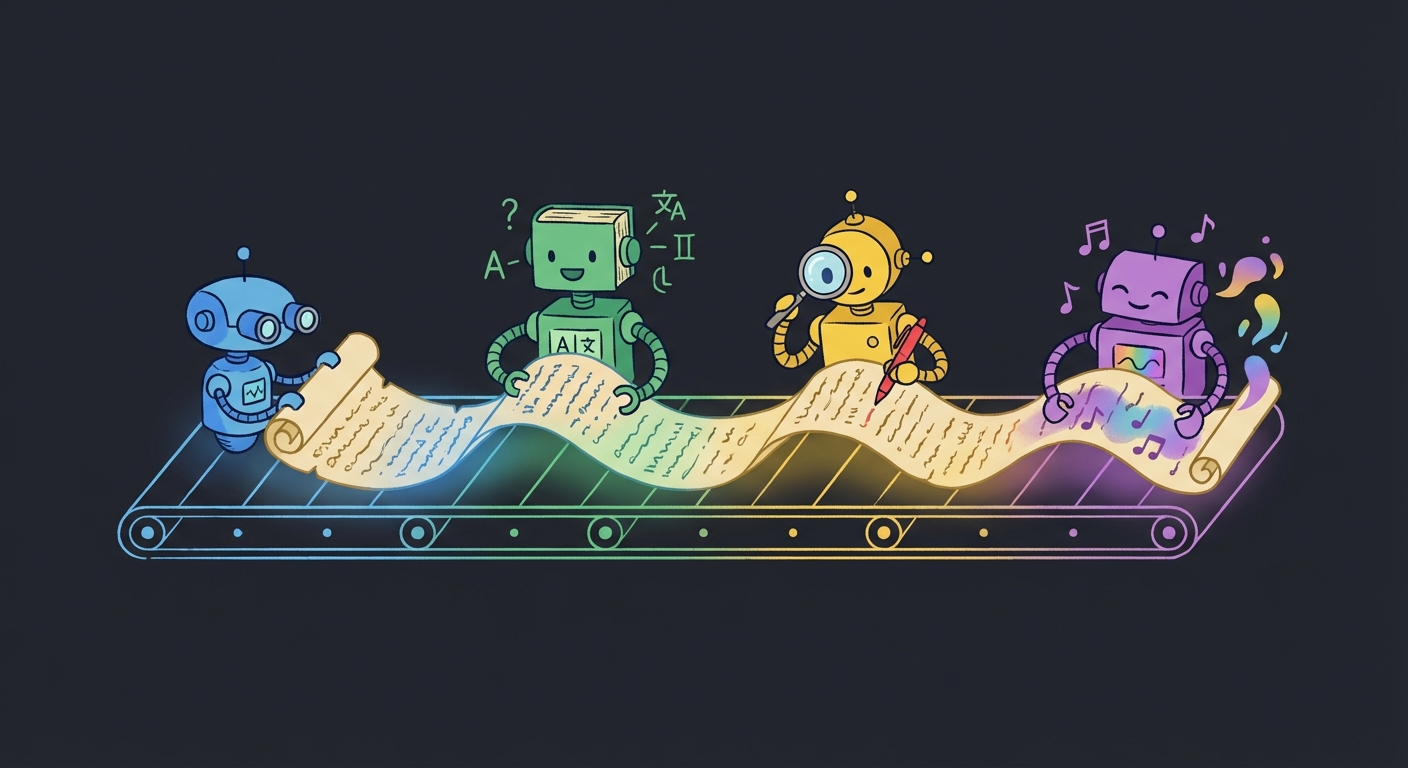
Text Grand Central runs three Claude models in coordination: Opus 4.6 for complex literary passages, Sonnet 4 for technical content, Haiku 4.5 for straightforward narrative. Each agent specializes. A coordinator manages consistency. Quality assurance agents validate cultural adaptation.
The result: 89% improvement in consistency and fluency metrics compared to single-model approaches—though it's important to note these are algorithmic quality scores (MTQE-based), not human literary judgment. They measure structural quality, not artistic merit. That remaining gap is exactly where human expertise becomes irreplaceable.
The breakthrough isn't better AI. It's better orchestration.
How I Built What Actually Works
Text Grand Central processes entire novels while maintaining narrative consistency. The architecture handles three decision layers:
Linguistic Processing: Claude Opus 4.6 identifies idioms, cultural references, literary devices. It flags passages requiring human specification.
Cultural Adaptation: Specialized agents determine target-audience adaptation strategies. Should biblical allusions be preserved or explained?
Consistency Management: Terminology databases track character names, recurring motifs, technical terms across chapters. One agent maintains the glossary. Another validates usage.
The system doesn't translate. It specifies what needs human decision-making and executes everything else flawlessly.
My role shifted from production to architecture. I don't write translations—I design agent behaviors and validate outputs. The AI does 90% of the work; I add 100% of the value through specification and judgment.
This mirrors what's happening across creative industries. When Anthropic launched legal plugins for Claude, expertise transformed. Not because AI replaced lawyers, but because it changed what human legal expertise means.
Why Translation Matters
Literary translation remains humanity's most honest test of cross-cultural understanding. James Joyce's Finnegans Wake contains thunderwords—100-letter syllables blending Hindustander, Irish, and invented language across cultures. The first one alone requires encyclopedic cultural knowledge.
I fed passages like this to Text Grand Central. The system identified language fragments, mapped phonetic patterns, suggested adaptation strategies. But it couldn't make the creative leaps that transform translation into literature.
That's the core insight: the most valuable literary translations aren't faithful to the original—they're faithful to literature itself. As Jorge Luis Borges said, "A translation could be more faithful to literature than to its original text."
AI excels at recognizing patterns humans miss. But literature lives in the gaps between patterns—in choices that can't be specified algorithmically.
What I Learned Building This
The hardest part of Text Grand Central wasn't the technical architecture. It was learning to specify intent precisely enough that multi-agent systems could execute reliably.
"Make it sound natural" isn't a specification. "Maintain academic tone while simplifying technical jargon for business readers" is a specification.
"Fix the cultural references" isn't actionable. "Replace metaphors while preserving competitive dynamics" works.
That's the lesson I keep relearning: the hard part is never the technology. It's knowing what to ask for.

What I Don't Know
I'm not qualified to predict what happens to the translation industry. I don't know which translators will thrive and which won't — I haven't spent decades in their profession, and the people who have are better positioned to answer that question.
What I can say is what I observed from one narrow angle: building a tool for my own book. From that angle, the professionals I interacted with — including translators who responded to this article — demonstrated expertise that my system can't touch. Not "can't touch yet." Can't touch, period. The cultural judgment, the ability to improve an original while translating it, the domain knowledge that lets someone catch a factual error in the source text — these aren't production tasks waiting to be automated.
A 2021 special issue of Cultus: The Journal of Intercultural Mediation and Communication explores this as "Translation Plus" — the idea that the best translators go far beyond linguistic conversion. They engage clients collaboratively, push back on weak source text, recommend better approaches, and bring domain knowledge that shapes the final product. The interview with Rose Newell in that issue is striking: she describes correcting clients' originals, presenting bilingual tables with her reasoning, and turning down work that doesn't match her standards.
I didn't know this framework existed when I started building Text Grand Central. I was focused on the production layer and assumed that was most of the work. It's not. The production is the easy part.
What I Actually Learned
I didn't build Text Grand Central to understand an industry. I built it because I wrote a book and the cost of professional literary translation across multiple languages was out of reach. That's it. Along the way, I learned things I didn't expect:
The technology works better than I thought it would at the mechanical parts — consistency, terminology, basic fluency. And it fails harder than I expected at everything that makes translation worth reading — voice, humor, cultural resonance, the choices that turn a competent translation into literature.
I'm not in a position to say what this means for the profession. The translators in the comments on this article have decades of expertise I don't have. What I can say is that building this tool gave me deep respect for what they do — respect I didn't fully have when I started, and that's on me.
Note: I'm not a linguist or literary scholar. I'm a tinkerer who built a translation tool for my own book and was humbled by what I found. This article reflects what I learned along the way — not domain expertise. Corrections have been made based on feedback from translation professionals, and I'm grateful for every one of them.
Sources & Inspiration
- MAS-LitEval Framework - Multi-agent literary translation evaluation
- TransAgents System - Multi-agent translation architecture
- Fortune Business Insights - Language Services Market
- The Markup - AI in Publishing
- 10 Literary Moments Lost in Translation
- Famous Translators on Art of Translation
- Best LLM for Translation 2026
- Cultus Journal, Issue 14 — "Translation Plus: The Added Value of the Translator" (2021) — Peer-reviewed special issue on the irreplaceable value translators add beyond linguistic conversion
- Kocmi et al. — Navigating the Metrics Maze (Computational Linguistics, 2024) — Academic analysis of MT quality evaluation limitations
- Bureau of Labor Statistics — Interpreters and Translators Outlook — Employment projections through 2033
📝 Editorial Corrections (2026-02-19): This article was updated based on feedback from commenters and professionals in the translation industry. Key corrections: (1) Originally described literary translation as "the premium segment" — it's actually one of the lower-paid specializations relative to the skill required. (2) The 89% quality metric is algorithmic (MTQE-based), not human literary judgment. (3) Text Grand Central is in active development, not commercially deployed — unverifiable publisher references removed. (4) Added the "Translator Plus" concept from Cultus Journal (2021) — the academic framework for understanding what translators add beyond conversion. (5) Added humility disclaimer: I'm a builder learning about translation, not a linguist. I own what I publish and I correct what's wrong.